We detect fabricated APIs, incorrect logic, deprecated methods, insecure patterns, and silently failing code generated by GitHub Copilot, Codex, and GPT-based developer tools. Our real-world repository workflow testing exposes hallucinations that only appear during long-session development and production-level integration.
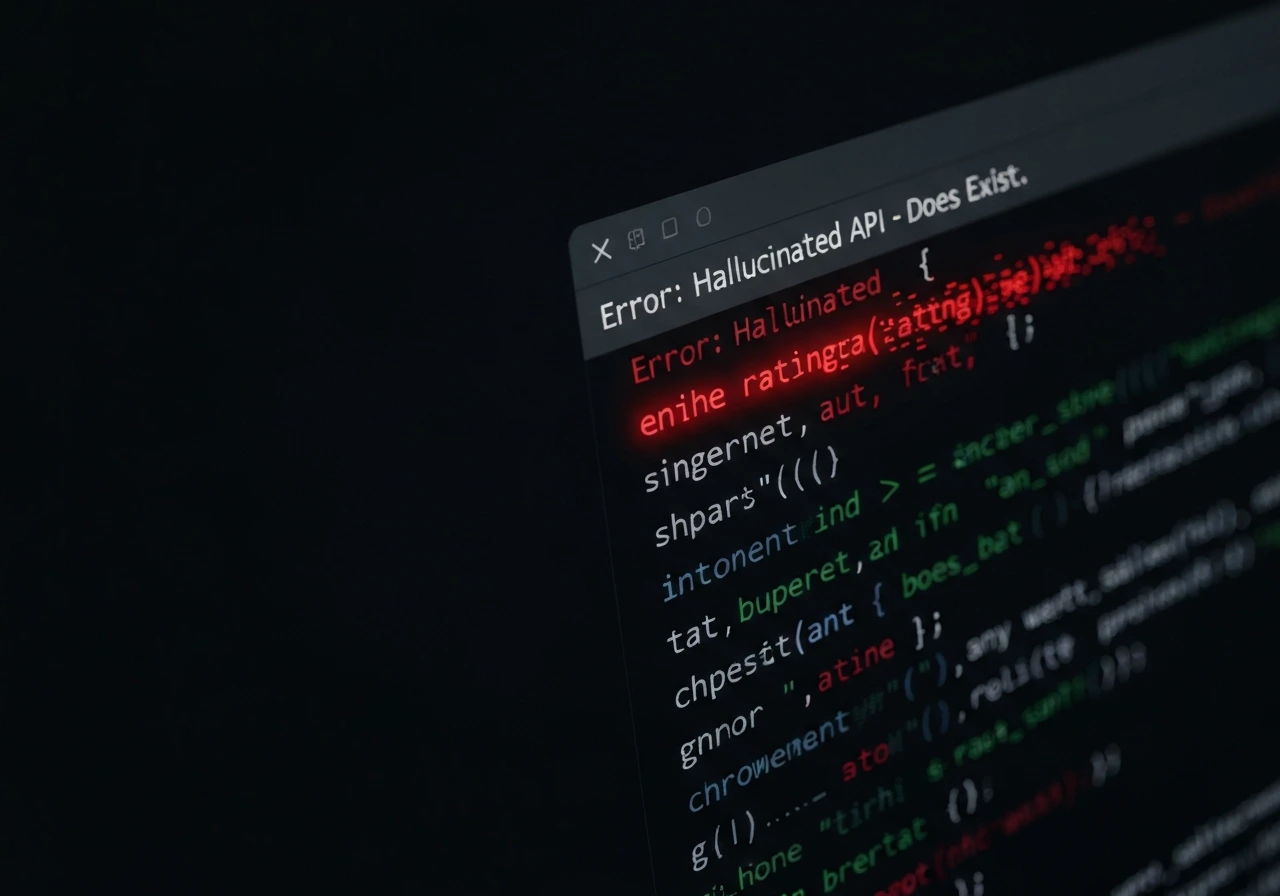
We simulate real development workflows to identify when AI coding assistants generate incorrect, fabricated, or unsafe code under sustained usage.
Identify when models reference non-existent methods, outdated documentation, or hallucinated third-party libraries that compile incorrectly or fail at runtime.
Detect incorrect business logic, missing edge-case handling, and silent runtime failures that appear correct syntactically but break under real execution.
Surface insecure authentication flows, exposed secrets, unsafe database queries, and vulnerable dependency usage introduced by AI-generated code.
Test AI behavior across real repositories, multi-file projects, and iterative development sessions to uncover hallucinations hidden in isolated prompts.
Evaluate whether the model maintains correctness across refactors, feature extensions, and dependency updates without introducing contradictory or unstable outputs.
Measure hallucination frequency across languages, frameworks, and use cases, providing structured ASR feedback your engineering team can act on immediately.
Fabricated APIs, incorrect logic, and unsafe patterns in AI-generated code can silently damage production systems. Structured hallucination detection protects engineering velocity, system stability, and developer trust.
AI-generated code may compile successfully but fail at runtime due to fabricated methods, deprecated libraries, or incomplete edge-case handling. Detecting these hallucinations before deployment prevents costly outages and emergency patches.
When developers rely on AI suggestions that later break under integration, debugging time increases and trust declines. Early hallucination detection keeps development workflows stable and predictable.
AI coding assistants can introduce insecure authentication flows, unsafe queries, or misconfigured dependencies. Systematic hallucination testing uncovers hidden vulnerabilities before they reach production environments.
Long-term adoption of Code AI depends on reliability. Structured ASR reporting highlights consistency gaps and behavioral risks, helping teams confidently deploy AI-assisted development at scale.
A structured, production-focused workflow to uncover fabricated APIs, incorrect logic, insecure patterns, and silent runtime failures in AI-generated code.
We understand your codebase structure, frameworks, dependencies, and real development workflows to establish realistic testing conditions.
We simulate multi-step development tasks, feature extensions, refactors, and integration flows to trigger hallucinations that only appear during sustained usage.
AI-generated code is executed, integrated, and stress-tested to detect fabricated APIs, incorrect logic, insecure implementations, and hidden runtime failures.
We deliver a detailed AI System Review outlining hallucination frequency, severity levels, reproducible cases, and clear mitigation guidance your engineering team can act on immediately.
We identify various forms of fabricated outputs that can undermine AI reliability and user trust
Model generates completely false facts, statistics, dates, or events that never occurred or cannot be verified.
Incorrectly attributing quotes, ideas, or works to the wrong person or making up entirely fictional sources.
Mixing information from different contexts or conflating unrelated facts to create plausible but false statements.
Providing conflicting information in different parts of a response or across multiple interactions.
Getting dates, timelines, or chronological order wrong, or inventing fictional historical events.
Adding unnecessary specific details that sound plausible but are not supported by available information.
AI-generated code errors often remain invisible until integration or production. These environments require structured hallucination testing before deployment.
Multi-file projects and shared codebases where fabricated APIs or incorrect integrations can cascade into system-wide failures.
AI-assisted refactoring and feature expansion often introduce subtle inconsistencies that break logic under real execution.
Detect hallucinated authentication logic, unsafe token handling, and vulnerable dependency usage before production deployment.
Prevent fabricated endpoints, incorrect schema assumptions, and invalid query patterns that silently fail during runtime.
Ensure AI-generated build scripts, configuration files, and automation logic do not introduce unstable deployment behavior.
Maintain long-term developer trust by validating consistency, predictability, and reliability across sustained AI-assisted workflows.
Trusted by AI-first companies operating in real production environments
Stay updated with our newest research, methodologies, and engineering blogs.
We evaluate AI systems under real-world usage conditions - uncovering hidden reliability gaps, behavioral drift, hallucinations, and trust issues before they impact users, revenue, or enterprise adoption. Schedule a focused AI System Review consultation with our team.