We evaluate GitHub Copilot, Codex, GPT-based coding assistants, and custom code LLMs to ensure stable, predictable, and production-ready behavior across real development workflows.
Code reliability is not just about correctness in isolated prompts. It requires consistency across repeated runs, long-session context retention, edge-case handling, and architectural coherence within full repositories.
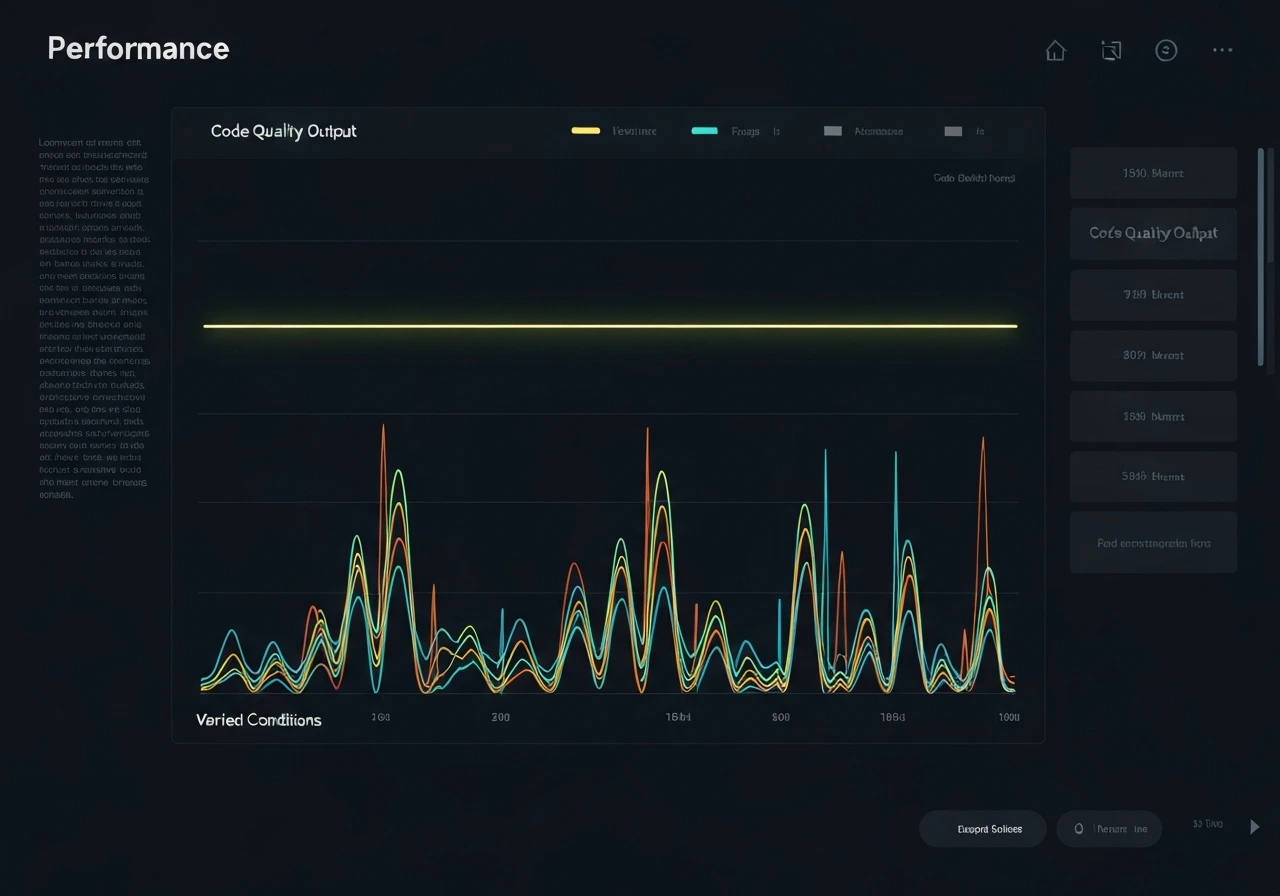
We evaluate reliability across real engineering workflows, not just isolated code snippets.
We measure variance across identical and similar prompts to detect instability in implementation style, logic flow, and structural decisions.
We evaluate how reliably the model maintains architectural consistency across extended development sessions within real repositories.
We stress test unusual inputs, boundary conditions, and failure scenarios to detect fragile logic or incomplete implementations.
We verify that generated components align with existing project structure, dependency patterns, and coding standards.
We detect hallucinated libraries, deprecated methods, and incorrect ecosystem usage that undermine production reliability.
We assess security handling, error resilience, and maintainability to determine whether outputs meet enterprise deployment standards.
Inconsistent code generation reduces developer trust, increases technical debt, and introduces hidden production risks.
Unstable outputs create conflicting architectures and inconsistent logic. Reliability testing ensures repeated prompts produce predictable, structurally aligned implementations.
AI coding assistants often degrade across extended sessions. We evaluate context retention and structural continuity to prevent logic drift over time.
Edge-case fragility and incomplete implementations can pass superficial checks but fail in real systems. Reliability testing exposes these weaknesses early.
Engineers rely on predictable assistants. Stable behavior improves adoption, reduces manual rewrites, and strengthens confidence in AI-driven workflows.
A structured workflow-based approach to measuring stability, variance, and behavioral consistency.
Establish expected architectural and logic patterns across standard prompt scenarios.
Execute identical and near-identical prompts to measure structural and logical divergence.
Simulate extended repository development sessions to evaluate context retention and logic stability.
Deliver structured AI System Review reports highlighting instability patterns and remediation priorities.
We evaluate behavioral stability, architectural consistency, and implementation robustness across real development workflows.
Measure implementation variance across identical and near-identical prompts to detect instability in logic, structure, and design decisions.
Simulate extended repository development sessions to evaluate context retention and architectural continuity.
Validate alignment with project structure, dependency management, and existing code conventions.
Stress unusual inputs, rare scenarios, and complex branching logic to identify fragile implementations.
Detect hallucinated libraries, deprecated methods, and ecosystem misuse that undermine reliability.
Evaluate security handling, error resilience, and maintainability against enterprise standards.
Reliability testing is critical wherever AI-generated code directly impacts production systems and developer workflows.
GitHub Copilot, Codex, GPT-based developer tools, and enterprise code LLM deployments.
AI-assisted feature development within real repositories including backend services, APIs, and frontend systems.
Multi-language services where architectural drift can create long-term reliability issues.
Large-scale applications where inconsistent code introduces technical debt and deployment risk.
Containerized, CI/CD-driven systems requiring stable, production-grade code generation.
Finance, healthcare, and security-sensitive systems where unreliable code introduces compliance risks.
Trusted by AI-first companies operating in real production environments
Stay updated with our newest research, methodologies, and engineering blogs.
We evaluate AI systems under real-world usage conditions - uncovering hidden reliability gaps, behavioral drift, hallucinations, and trust issues before they impact users, revenue, or enterprise adoption. Schedule a focused AI System Review consultation with our team.