Multi-Language Code AI Testing Across 50+ Programming Languages

We evaluate GitHub Copilot, Codex, GPT-4, and custom Code LLMs across Python, JavaScript, TypeScript, Java, C++, Go, Rust, PHP, C#, Swift, Kotlin, and other production environments. Our testing simulates real multi-language repositories to uncover cross-language inconsistencies, runtime failures, framework-specific hallucinations, and security risks before deployment.
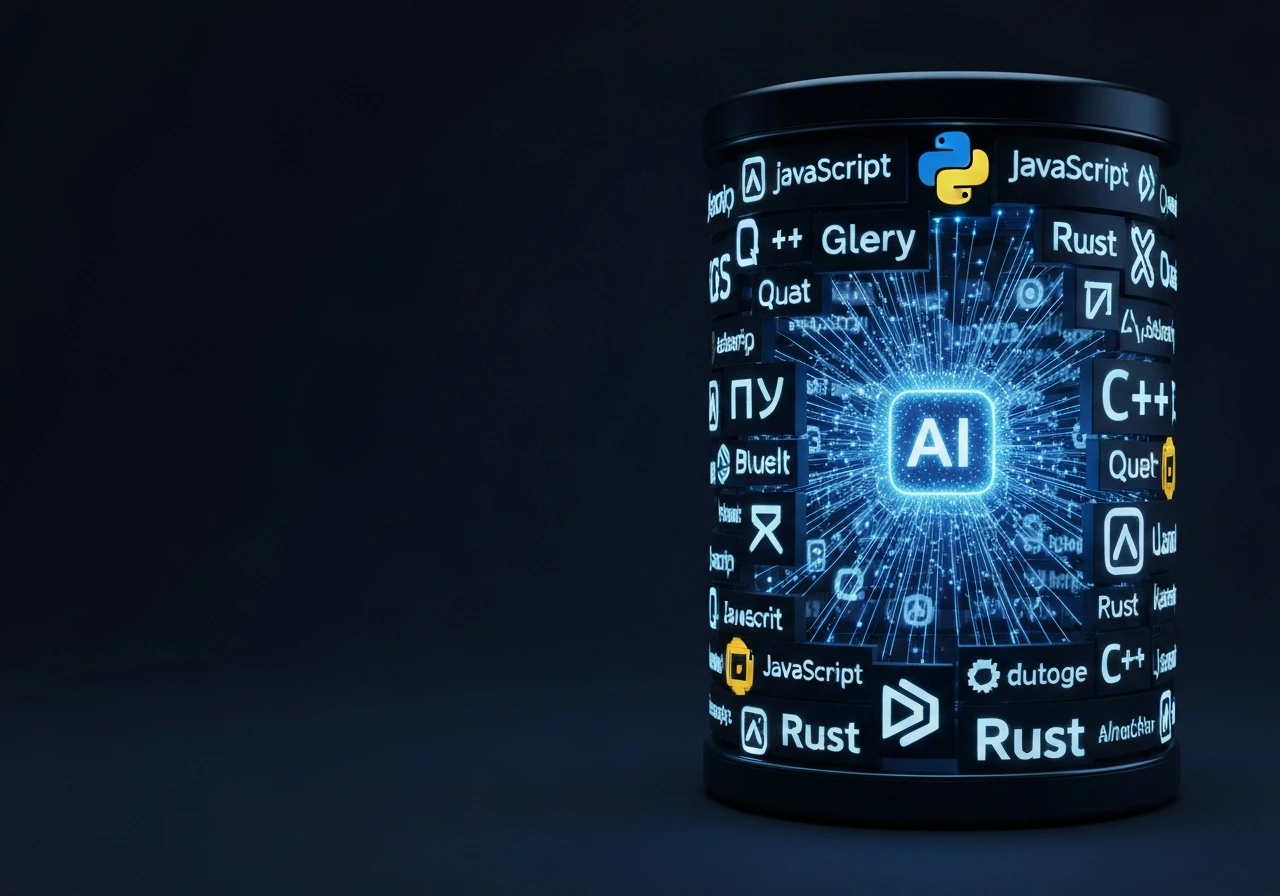

Multi-Language Code AI Testing and Cross-Language Validation

Comprehensive Multi-Language Code AI Validation

We test AI coding assistants across diverse programming languages, frameworks, and runtime environments to ensure correctness, security, and cross-language consistency.

Language-Specific Logic Validation

Verify correctness across strongly typed and dynamically typed languages including TypeScript, Java, Go, Python, Rust, and C++. We detect type mismatches, incorrect generics, unsafe casting, and language-specific logic failures.

Framework & Library Compatibility

Test generated code against real framework versions and dependency ecosystems including React, Node.js, Spring Boot, Django, FastAPI, .NET, and more. We uncover hallucinated APIs and deprecated methods.

Compilation & Runtime Testing

Ensure code compiles successfully and behaves correctly at runtime. We identify silent failures, incorrect async handling, and environment-specific errors that do not appear in isolated prompts.

Cross-Language Consistency

Evaluate whether the AI maintains architectural consistency when switching between backend and frontend stacks or different microservices written in separate languages.

Security Pattern Review

Detect insecure coding patterns introduced in specific ecosystems, such as SQL injection risks, unsafe deserialization, improper authentication flows, or exposed secrets.

Performance & Resource Analysis

Identify inefficient loops, memory leaks, concurrency mismanagement, and performance bottlenecks across compiled and interpreted languages.

Why Multi-Language Code AI Testing Matters

AI coding assistants behave differently across programming languages, frameworks, and runtime environments. Structured multi-language testing ensures reliability across your entire technology stack.

Protect Full-Stack Consistency

Modern systems span multiple languages such as TypeScript for frontend, Go or Java for backend, and Python for services. Testing ensures the AI maintains architectural and logic consistency across the entire stack.

Reduce Cross-Language Security Risk

Security vulnerabilities vary by ecosystem. Multi-language validation identifies unsafe dependency usage, injection risks, misconfigured authentication flows, and language-specific attack surfaces.

Prevent Framework-Specific Failures

AI-generated code may reference deprecated APIs or incorrect framework versions. Testing across real build systems and dependency managers prevents deployment-breaking issues.

Maintain Engineering Velocity

When AI behaves inconsistently across languages, debugging effort increases and trust declines. Structured testing ensures predictable behavior across repositories, reducing friction for engineering teams.

Our Multi-Language Code AI Testing Process

A production-focused evaluation framework designed to validate AI coding assistants across diverse programming languages, frameworks, and runtime environments.

Stack & Language Mapping

Identify the programming languages, frameworks, build tools, and deployment environments used in your production systems.

Repository Workflow Simulation

Execute multi-file development tasks across real repositories to test cross-language integration, dependency handling, and architectural consistency.

Compilation & Runtime Validation

Validate that generated code compiles successfully, executes correctly, and handles environment-specific constraints across different ecosystems.

Cross-Language Risk Analysis

Measure performance gaps, hallucination frequency, security vulnerabilities, and logic inconsistencies across programming languages with structured ASR reporting.

Programming Language–Specific Challenges We Test

AI coding assistants behave differently across programming ecosystems. We identify language-specific risks, inconsistencies, and failure patterns that appear only under real development workflows.

Typed vs Dynamic Systems

Detect incorrect generics, unsafe casting, type inference failures, and mismatched interfaces in languages like TypeScript, Java, Go, and Rust.

Memory & Resource Management

Identify memory leaks, improper pointer usage, concurrency mismanagement, and inefficient resource handling in systems languages such as C++ and Rust.

Async & Concurrency Models

Validate correct implementation of async/await, threading, goroutines, promises, and event loops across JavaScript, Python, Go, and Java ecosystems.

Framework & Dependency Ecosystems

Uncover hallucinated APIs, deprecated packages, and incorrect version references across React, Node.js, Spring Boot, Django, FastAPI, and .NET environments.

Cross-Language Integration

Test integration between frontend and backend stacks, microservices written in different languages, and API contract consistency across systems.

Language-Specific Security Risks

Identify SQL injection risks, unsafe deserialization, improper auth handling, and ecosystem-specific vulnerabilities introduced by AI-generated code.

Systems Requiring Multi-Language Code AI Testing

Modern software architectures rely on multiple programming languages and ecosystems. We ensure AI coding assistants behave reliably across polyglot production environments.

Full-Stack Applications

Validate AI-generated code across frontend and backend stacks such as React + Node.js, Angular + Java, or Vue + Go.

Microservices Architectures

Test AI-generated services written in different languages communicating via APIs, ensuring contract and logic consistency.

Cloud-Native Systems

Validate code generated for containerized environments, serverless functions, and CI/CD workflows across multiple stacks.

Data & Backend Services

Test AI-generated database queries, ORM usage, caching layers, and data pipelines across Python, Java, Go, and .NET ecosystems.

Developer Tooling & IDE Extensions

Evaluate AI-powered code assistants embedded in IDEs to ensure consistent behavior across multiple programming environments.

Enterprise SaaS Platforms

Ensure AI-generated features remain stable across complex, multi-language enterprise systems with strict security and compliance requirements.

What AI Teams Say About Working With Us

Trusted by AI-first companies operating in real production environments

"Acadify evaluated our code AI models under real repository workflows and long-session usage. Their structured AI System Review helped us uncover subtle edge cases and behavioral inconsistencies that internal testing didn’t surface. It significantly improved our production reliability."
Magic AI
Engineering Leadership
Magic AI
"The team didn’t just test our AI system - they simulated real user behavior over time. Their detailed feedback revealed reliability gaps and trust issues that could have impacted adoption post-launch. The ASR report was clear, structured, and immediately actionable."
Product Team
Krustha AI
"For our generative image platform, Acadify analyzed consistency across repeated creative workflows. They identified drift and subtle behavioral patterns that affected output predictability. Their real-world testing approach helped us strengthen long-term user confidence."
Core Team
Mihu – AI Image Platform
"Acadify’s production-level AI testing ensured our application behaved reliably under sustained usage. Their workflow-based evaluation exposed performance gaps and edge cases before our users experienced them."
Engineering Team
Blueribbon Solution
"Acadify helped us evaluate our AI workflows beyond surface-level accuracy metrics. Their real-world simulation uncovered subtle reliability gaps and edge-case behavior that would have affected enterprise users. The structured ASR feedback gave our engineering team a clear roadmap for improvement."
AI Engineering Team
Stealth Company
"What stood out was their focus on long-session usage and workflow consistency. Acadify didn’t just test prompts — they evaluated how our AI system behaved under real operational pressure. Their production validation significantly improved predictability and internal confidence before launch."
Product & Engineering Leadership
Stealth Company

Latest Insights & Case Studies

Stay updated with our newest research, methodologies, and engineering blogs.

Loading blogs...

Is Your AI Truly Production-Ready?

We evaluate AI systems under real-world usage conditions - uncovering hidden reliability gaps, behavioral drift, hallucinations, and trust issues before they impact users, revenue, or enterprise adoption. Schedule a focused AI System Review consultation with our team.