Enterprise Code Prompt Optimization & Validation

We evaluate and optimize prompts for GitHub Copilot, Codex, GPT-based coding assistants, and custom code LLMs to improve output accuracy, reduce hallucinations, and enhance consistency across real development workflows.

In production environments, prompt structure directly impacts architecture decisions, security patterns, and long-term maintainability. Our structured prompt testing analyzes how comments, instructions, constraints, and context windows influence generated code behavior over repeated sessions.

We deliver clear, actionable optimization guidance through workflow-based evaluation and structured AI System Review reports, enabling your team to systematically improve prompt reliability at scale.
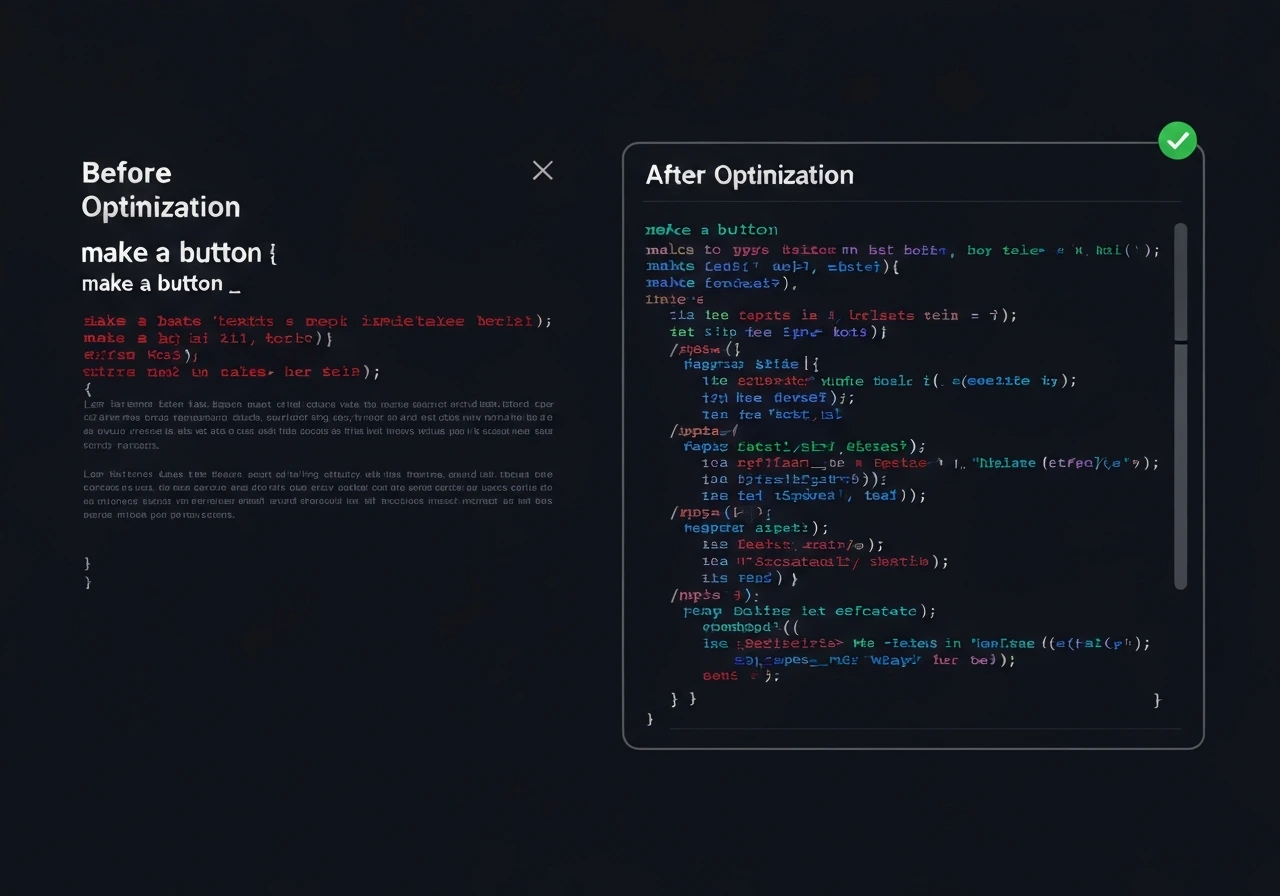
Code Prompt Optimization & AI Prompt Validation Testing

Comprehensive Code Prompt Evaluation & Optimization

We analyze how prompt structure, comments, constraints, and contextual inputs influence generated code behavior in real development workflows.

Prompt-to-Code Accuracy Testing

We verify that generated code correctly implements requested functionality, respects constraints, and aligns with intended architecture rather than producing approximations.

Security & Best Practice Alignment

Evaluate whether prompts lead to secure implementations, proper validation, safe dependency usage, and adherence to modern development standards.

Determinism & Stability Analysis

Test how similar prompts produce variant outputs across runs, identifying instability patterns and optimization opportunities.

Context Window Sensitivity Testing

Analyze how file structure, surrounding code, and extended context affect output quality in multi-file repositories.

Architecture Consistency Validation

Ensure prompts do not cause inconsistent design patterns, conflicting implementations, or structural drift over iterative sessions.

Structured Optimization Guidance

Deliver ASR-style reports with actionable prompt improvements, helping teams systematically increase code reliability and predictability.

Why Code Prompt Optimization Matters

Prompt structure directly influences architecture, security, and long-term maintainability in AI-generated code.

Increase Code Reliability

Optimized prompts reduce hallucinated APIs, incomplete implementations, and unstable logic patterns across repeated coding sessions.

Improve Architectural Consistency

Structured prompt validation prevents conflicting design patterns and ensures generated components align with your existing codebase.

Reduce Output Variability

Identify and eliminate variance patterns where similar prompts produce inconsistent implementations.

Accelerate Production Readiness

Well-optimized prompts decrease rework cycles, debugging time, and integration friction in enterprise development environments.

Our Code Prompt Optimization Process

A structured workflow-based approach to evaluating and improving prompt reliability in real development environments.

Workflow Context Analysis

Review repository structure, stack, constraints, and engineering goals before evaluating prompt behavior.

Iterative Prompt Execution

Run controlled prompt variations across repeated sessions to measure determinism, variance, and architecture drift.

Stability & Accuracy Assessment

Evaluate output correctness, dependency usage, security alignment, and multi-file reasoning performance.

Structured Optimization Report

Deliver ASR-style documentation with measurable improvements and prompt refinement strategies for engineering teams.

Code Prompt Types We Evaluate

We test how different coding prompt structures influence output stability, security, architectural alignment, and reproducibility.

Feature Implementation Prompts

Requests to build complete components, APIs, services, or UI features within existing repositories.

Debugging & Fix Prompts

Prompts asking the AI to identify and fix runtime errors, logic flaws, dependency issues, or failing test cases.

Refactoring Prompts

Instructions to restructure code for performance, maintainability, or architectural consistency.

Architecture & Pattern Prompts

Requests to apply design patterns, microservice structures, or framework-specific conventions.

Security-Constrained Prompts

Prompts that require secure coding practices, validation rules, authentication flows, and compliance constraints.

Multi-File & Contextual Prompts

Prompts that depend on surrounding files, shared utilities, or repository-wide architectural decisions.

Engineering Systems Requiring Code Prompt Optimization

Code prompt reliability is critical for AI-powered development tools operating in real production environments.

AI Coding Assistants

IDE-integrated assistants that generate production-ready code across frontend, backend, and infrastructure layers.

Enterprise SaaS Platforms

Complex systems requiring consistent architecture, secure implementation, and maintainable generated features.

Cloud-Native Applications

AI-assisted development for containerized services, serverless functions, and CI/CD automation pipelines.

Data & Backend Systems

Prompt-driven generation of APIs, queries, caching logic, and distributed service components.

Security-Sensitive Systems

Environments where prompt weaknesses could introduce vulnerabilities, compliance violations, or architectural drift.

Internal Engineering Tooling

Custom AI workflows used by development teams to accelerate coding while maintaining quality standards.

What AI Teams Say About Working With Us

Trusted by AI-first companies operating in real production environments

"Acadify evaluated our code AI models under real repository workflows and long-session usage. Their structured AI System Review helped us uncover subtle edge cases and behavioral inconsistencies that internal testing didn’t surface. It significantly improved our production reliability."
Magic AI
Engineering Leadership
Magic AI
"The team didn’t just test our AI system - they simulated real user behavior over time. Their detailed feedback revealed reliability gaps and trust issues that could have impacted adoption post-launch. The ASR report was clear, structured, and immediately actionable."
Product Team
Krustha AI
"For our generative image platform, Acadify analyzed consistency across repeated creative workflows. They identified drift and subtle behavioral patterns that affected output predictability. Their real-world testing approach helped us strengthen long-term user confidence."
Core Team
Mihu – AI Image Platform
"Acadify’s production-level AI testing ensured our application behaved reliably under sustained usage. Their workflow-based evaluation exposed performance gaps and edge cases before our users experienced them."
Engineering Team
Blueribbon Solution
"Acadify helped us evaluate our AI workflows beyond surface-level accuracy metrics. Their real-world simulation uncovered subtle reliability gaps and edge-case behavior that would have affected enterprise users. The structured ASR feedback gave our engineering team a clear roadmap for improvement."
AI Engineering Team
Stealth Company
"What stood out was their focus on long-session usage and workflow consistency. Acadify didn’t just test prompts — they evaluated how our AI system behaved under real operational pressure. Their production validation significantly improved predictability and internal confidence before launch."
Product & Engineering Leadership
Stealth Company

Latest Insights & Case Studies

Stay updated with our newest research, methodologies, and engineering blogs.

Loading blogs...

Is Your AI Truly Production-Ready?

We evaluate AI systems under real-world usage conditions - uncovering hidden reliability gaps, behavioral drift, hallucinations, and trust issues before they impact users, revenue, or enterprise adoption. Schedule a focused AI System Review consultation with our team.