We evaluate GitHub Copilot, Codex, GPT-based coding assistants, and custom code LLMs to ensure consistent behavior across repeated prompts, iterative sessions, and production development workflows.
In real engineering environments, inconsistency leads to unpredictable architecture, conflicting implementations, and reduced developer trust. Our structured workflow-based testing reveals variance patterns, logic drift, and behavioral instability that benchmark tests fail to detect.
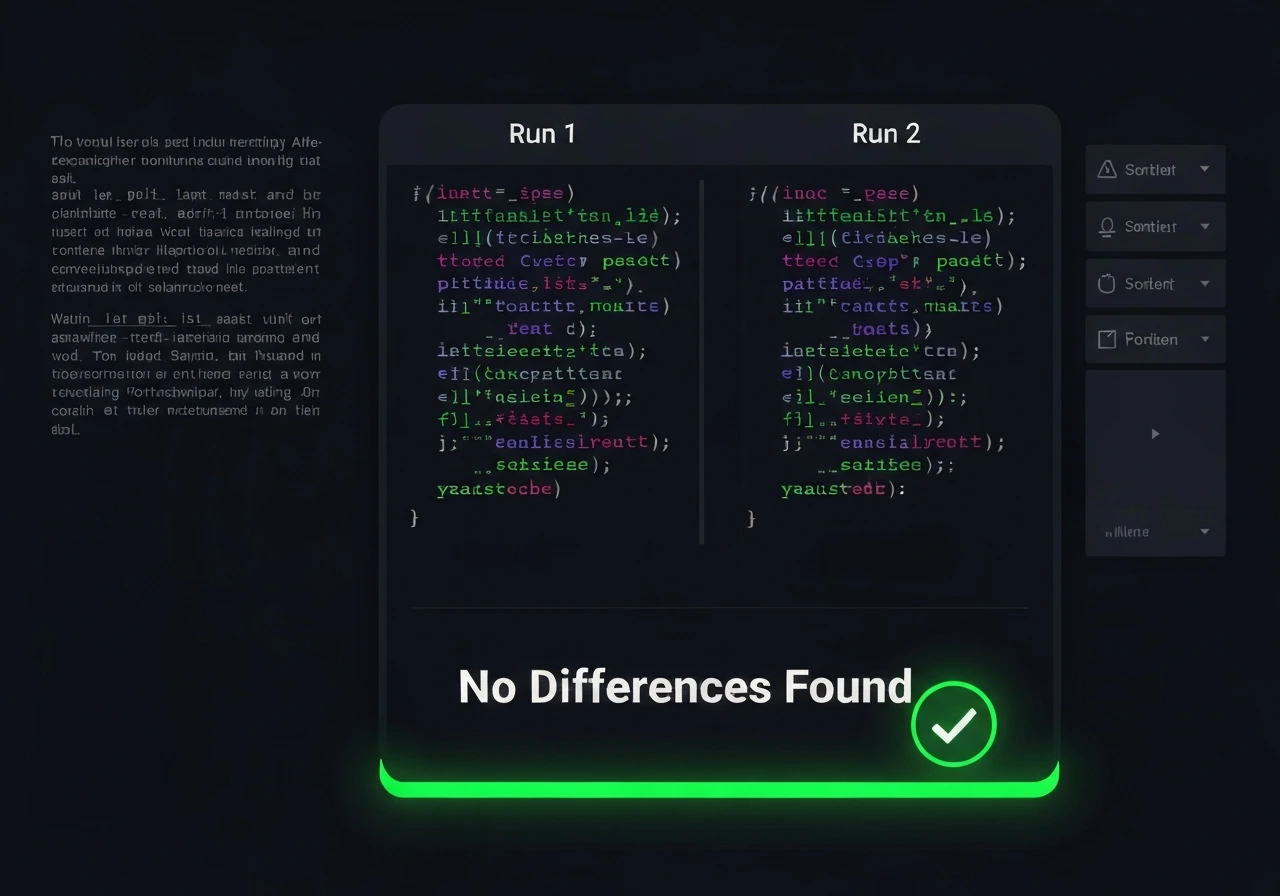
We evaluate stability in AI-generated code across repeated prompts, repository contexts, and long development sessions to ensure predictable engineering behavior in production environments.
We verify whether the same coding task produces structurally consistent implementations across multiple runs, preventing unpredictable architectural divergence.
We identify when similar prompts generate entirely different patterns, libraries, or logic structures that increase maintenance complexity in real repositories.
We simulate extended development workflows to detect logic drift, context loss, and inconsistent coding styles over time.
We analyze how configuration parameters affect structural code stability and determine safe settings for production deployment.
We evaluate whether generated code aligns with existing project architecture, naming conventions, and dependency choices.
We measure structural variance, semantic deviation, and logic drift to provide an objective stability score for your Code AI system.
Inconsistent AI-generated code increases technical debt, slows development, and reduces developer trust in AI systems.
Engineers adopt AI tools only when outputs are predictable. Stable behavior increases confidence and long-term usage.
Inconsistent implementations introduce fragmentation in coding patterns, libraries, and architectural decisions.
Reproducible outputs allow teams to diagnose issues, measure improvements, and validate model upgrades effectively.
Stable outputs make it possible to integrate Code AI into CI/CD pipelines and enterprise development workflows safely.
A structured, workflow-based methodology to measure implementation stability, architectural alignment, and behavioral variance in AI-generated code.
Analyze project structure, coding standards, and architectural constraints to define expected stability benchmarks.
Execute identical coding tasks across multiple runs and session states to detect structural and logical variance.
Measure divergence in patterns, dependencies, architectural choices, and code style consistency across outputs.
Deliver structured AI System Review reports with quantified stability metrics and actionable configuration recommendations.
We evaluate consistency across multiple technical layers to ensure reliable integration into real engineering environments.
Whether identical coding tasks generate structurally consistent implementations under identical settings.
Whether generated code adheres to existing project conventions, dependencies, and architectural patterns.
Whether different sessions maintain similar design patterns and avoid introducing conflicting structures.
How configuration changes such as temperature or sampling affect structural and logical stability.
Whether long development sessions introduce logic drift, inconsistent naming, or shifting implementation patterns.
Whether outputs remain consistent across environments, infrastructure layers, and CI/CD pipelines.
Code AI inconsistency introduces architectural drift, technical debt, and unpredictable behavior in production systems. These environments require structured stability evaluation.
Ensure AI-generated code aligns with existing architectural standards and avoids introducing conflicting patterns.
Validate consistent service structure, API contracts, and dependency usage across distributed systems.
Evaluate embedded code assistants to ensure predictable suggestions across sessions and repeated prompts.
Ensure AI-generated scripts and infrastructure code remain stable across builds, environments, and deployments.
Prevent inconsistent authentication flows, validation logic, or encryption patterns that increase vulnerability risk.
Maintain architectural uniformity across large engineering teams relying on AI-assisted development workflows.
Trusted by AI-first companies operating in real production environments
Stay updated with our newest research, methodologies, and engineering blogs.
We evaluate AI systems under real-world usage conditions - uncovering hidden reliability gaps, behavioral drift, hallucinations, and trust issues before they impact users, revenue, or enterprise adoption. Schedule a focused AI System Review consultation with our team.